

617 912-7900
617 912-7900
An accredited college field semester dedicated to
social and ecological regeneration

College Field Semester in
Regenerative Design
Live. Learn. Design. Transform.
The College Field Semester in Regenerative Design is a 16-credit sustainability field program for young adults who want to learn by doing while discovering more about themselves and making a difference in the world. Over 16 weeks in the deserts, rivers, and mountains of Southwest Colorado, students live in community, travel through national parks and wilderness landscapes, participate in reciprocal, community-hosted immersion with Diné families, and work on regenerative design and watershed resilience projects with local organizations.
College Field semester
in regenerative design
August 22 - December 18th, 2026
Durango, Colorado
16 credits / ages 18 - 24
Live. Learn. Design. Transform.
Wilderness travel & nature connection Community living & personal growth
Systems thinking & ecological literacy Applied regenerative design projects
community-hosted immersions with Diné families

Dr. Kobe Biederman teaches courses at Prescott College in:
The Education with Emphasis in Environmental Education MA Program
-
Design & Facilitation in Environmental Education
-
Philosophies & Trends in Environmental Education
The Outdoor Education Leadership MA Program
-
Ethical Risk Management


The College Field Semester in Regenerative Design is a college accredited sustainability field semester in Southwest Colorado for students who want education to be lived, not just studied. During the semester, students live in community, travel through desert canyons and mountain headwaters, explore watersheds and cultural histories, and work on real regenerative design projects with local partners. This is hands-on environmental education grounded in place, systems thinking, and applied practice.
Led by Dr. Kobe Biederman, students learn through field-based coursework in environmental science, environmental humanities, and systems thinking. The San Juan Basin becomes the classroom, with the Animas River watershed serving as a living laboratory for applied projects in watershed restoration, community resilience, and climate solutions.
Program Highlights:
-
Wilderness travel & field expeditions
-
Regenerative design & watershed restoration
-
Community living & personal growth
-
Reciprocal, community-hosted immersion with Diné families


Field Semester in Regenerative Design


A Semester in the Deserts, Rivers, and
Mountains of the Southwest
The American Southwest is a landscape of story and threshold. Red rock canyons, river corridors, alpine headwaters, and ancestral homelands form the living classroom. Students explore the San Juan Basin and Animas River watershed, visiting places like Mesa Verde National Park and the historic mining town of Silverton to understand the layered ecological and cultural history of the region.
Here, water tells a story. So does land. So do people. Students learn to see place not as scenery, but as a dynamic social-ecological system shaped by climate, culture, and time.


Learning Through Experience
This is not a semester of passive listening.
Students:
-
Backpack and raft through regional landscapes
-
Conduct watershed and field assessments
-
Work alongside nonprofit partners on sustainability initiatives
-
Engage in reciprocal, community-hosted immersion based on long standing relationships with Diné families
-
Reflect through journaling, dialogue, and guided inquiry
-
The semester is physically engaging, intellectually demanding, and personally clarifying.
Students do not just study regenerative systems. They live inside them.
collaborative program design
The Western Slope Institute College Field Semester in Regenerative Design brings together accredited academics through Prescott College and immersive field experience at Deer Hill Expeditions, creating a fully integrated college semester in sustainability and regenerative design.


Field semester
schedule

The Arc of the Semester
A Purpose-Built Academic Model
The Field Semester is not an outdoor program with academic credit added on. The 16 credits are not an afterthought — they are the structural foundation of the experience. This is designed as an experiential college semester.
The semester is designed and led by Dr. Kobe Biederman, whose doctoral research in sustainability education focused on regenerative development, place-informed design, and living systems thinking. The curriculum is not borrowed from an existing model; it is the direct manifestation of that research — a living prototype of regenerative education in action.
Students are not simply earning credits while backpacking. They are participating in a carefully sequenced learning arc rooted in cutting-edge thinking in regenerative systems and bioregional management. Field experiences, wilderness travel, and community-hosted immersions are not add-ons; they are intentionally integrated components of a coherent academic design. When students hike into the mountains, they are not just on a trip — they are studying watershed patterns, observing ecological relationships, and learning to read the landscape.
When they raft a river, they are tracing the movement of water through social and ecological systems. When they engage in community-based projects, they are applying regenerative design frameworks grounded in real research. This program is both lived experience and intellectual rigor — a place where theory becomes embodied practice.
Phase 1 : First 8 weeks (Courses 1 and 2)

August 22nd - 29th
Orientation Backpacking Trip in the
weminuche wilderness
Course 1 – Bioregional Awareness & Living Systems Thinking (4 Credits)
Students begin by grounding themselves in place. Through watershed exploration, mapping exercises, systems thinking tools, and an introduction to Diné land-based knowledge and relational ecological perspectives, they learn to read a landscape as both an ecological system and a cultural story.
By the end of this course, students can analyze how water, land, community, and history interact within a region. They develop a comprehensive systems portrait of the bioregion that informs the applied design work in the second half of the semester.
Focus areas: Watersheds, ecological literacy, systems thinking, place-based inquiry.
October 1st - 4th
Rafting Trip
on the San Juan river

Course 2 – Inner & Outer Dimensions of Regenerative Design (4 Credits)
Running alongside Course 1, this course focuses on the personal development that supports effective leadership and regenerative work.
Through structured reflection, resilience practices, and applied design frameworks, students explore identity, purpose, and their role within complex systems. Using the A.D.A.P.T. framework, they connect self-awareness to ecological and community impact.
By mid-semester, students articulate their personal strengths and how they can contribute meaningfully to regenerative projects.
Focus areas: Leadership development, resilience, regenerative design principles, purpose alignment.
Phase 2 : second 8 weeks (Courses 3 and 4)
.jpg)
October 21st - 25th
reciprocal, community-hosted immersion with Diné families
Course 3 – Place-Informed Project Design Studio (4 Credits)
Students shift from analysis to action. Working with local nonprofit and community partners, they design context-specific regenerative solutions grounded in real ecological and social needs.
Through collaborative studio work, stakeholder engagement, and iterative design, students develop practical interventions informed by the bioregional research completed earlier in the semester.
Focus areas: Applied sustainability, project design, collaboration, stakeholder engagement.
November 6th - 8th
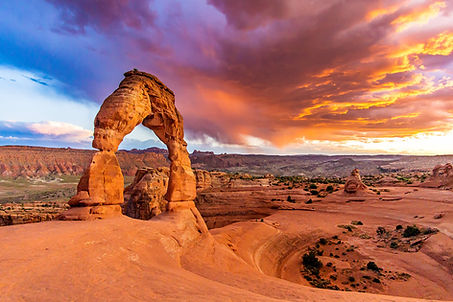
arches and Canyonlands
National Parks
Course 4 – Regenerative Practice & Community Engagement (Capstone) (4 Credits)
The semester culminates in a cohort-based capstone project implemented with a local partner organization.
Students take on defined roles within a shared project ecosystem, translating ideas into action. They present their work publicly, complete a professional portfolio, and reflect on their growth.
Focus areas: Capstone project, community engagement, applied regenerative design.

Field semester
BASECAMP
BASECAMP & WILDERNESS LEADERSHIP
Life at Deer Hill
Students are based at Deer Hill Expeditions’ 110-acre campus in Southwest Colorado. Housing includes shared cabins, meeting spaces, kitchens, and outdoor learning areas.
Campus life includes:
-
Shared meals and food preparation
-
Solar-powered facilities
-
Composting systems
-
Community responsibilities
-
Direct access to surrounding public lands
-
Sustainability is not theoretical here — it is daily practice.


Expedition Leadership & Safety
With over 40 years of experience in wilderness education, Deer Hill provides professional expedition leadership, risk management systems, permits, and logistical infrastructure.
All backpacking and rafting expeditions operate under established safety protocols and experienced guides. Long-standing Indigenous partnerships support community-hosted immersion with Diné families, grounded in respect and reciprocity.
(Ethical Commitments in Community-Hosted Immersions)
Students are challenged — and supported.
All wilderness travel and outdoor expeditions operate under Deer Hill’s permits, safety protocols, and experienced leadership.
Deer Hill expeditions basecamp facilities


Sustainability at Deer Hill
Deer Hill operates as a working model of sustainable living. Vegetables are grown organically at Basecamp, food waste is composted, and the main buildings use passive solar design and on-site renewable energy systems.
Students experience sustainability not only as an academic concept, but as a daily practice embedded in campus life.
college credit


Field Semester
Accreditation and College Credit
The College Field Semester in Regenerative Design is fully accredited through Prescott College, a nationally recognized leader in experiential education, sustainability studies, and social justice–oriented higher education. For more than five decades, Prescott College has been known for integrating rigorous academics with field-based learning, interdisciplinary inquiry, and real-world engagement.
Students earn 16 accredited Prescott College credits during the semester — transcripted coursework grounded in environmental science, environmental humanities, systems thinking, and applied regenerative design. These are not elective add-ons, but academically robust courses designed to meet college-level standards while remaining fully immersive and place-based. For students exploring degrees in environmental science, sustainability, environmental humanities, outdoor leadership, climate studies, or related fields, the Field Semester provides meaningful academic momentum alongside transformative lived experience.
 |  |
|---|---|
 |  |
 |

students leave
Prepared to Design What comes Next
By the end of the semester, students leave with far more than college credit. They leave with lived experience, demonstrated competence, and a clearer sense of who they are and how they want to contribute to the world.
Students complete a real-world regenerative design project in partnership with local organizations, gaining tangible, portfolio-ready work grounded in watershed restoration, climate resilience, and community-based sustainability. They develop the ability to think in systems, analyze complex social-ecological challenges, and move from insight to action.
Equally important, students strengthen leadership capacity, resilience, and self-awareness. Through wilderness travel, collaborative problem-solving, and structured reflection, they build confidence navigating uncertainty — a skill essential for both environmental work and adulthood. They learn to navigate uncertainty, contribute meaningfully to a team, and take responsibility for outcomes.
By the end of the semester, students leave with:
-
A completed capstone project
-
Portfolio-ready applied field experience
-
Experience in sustainability and regenerative design
-
Strengthened leadership, confidence and maturity
-
Greater clarity about their academic and life direction
-
Ability to apply systems thinking to complex environmental and social challenges
They leave not just prepared for the next academic step — but return more equipped to shape what comes next. More grounded, capable, and ready to design their future with intention.

.png)
